Downtown Franklin's Historic Homes Don't Sell On The Same Clock As Everywhere Else
September 17, 2026
September 17, 2026
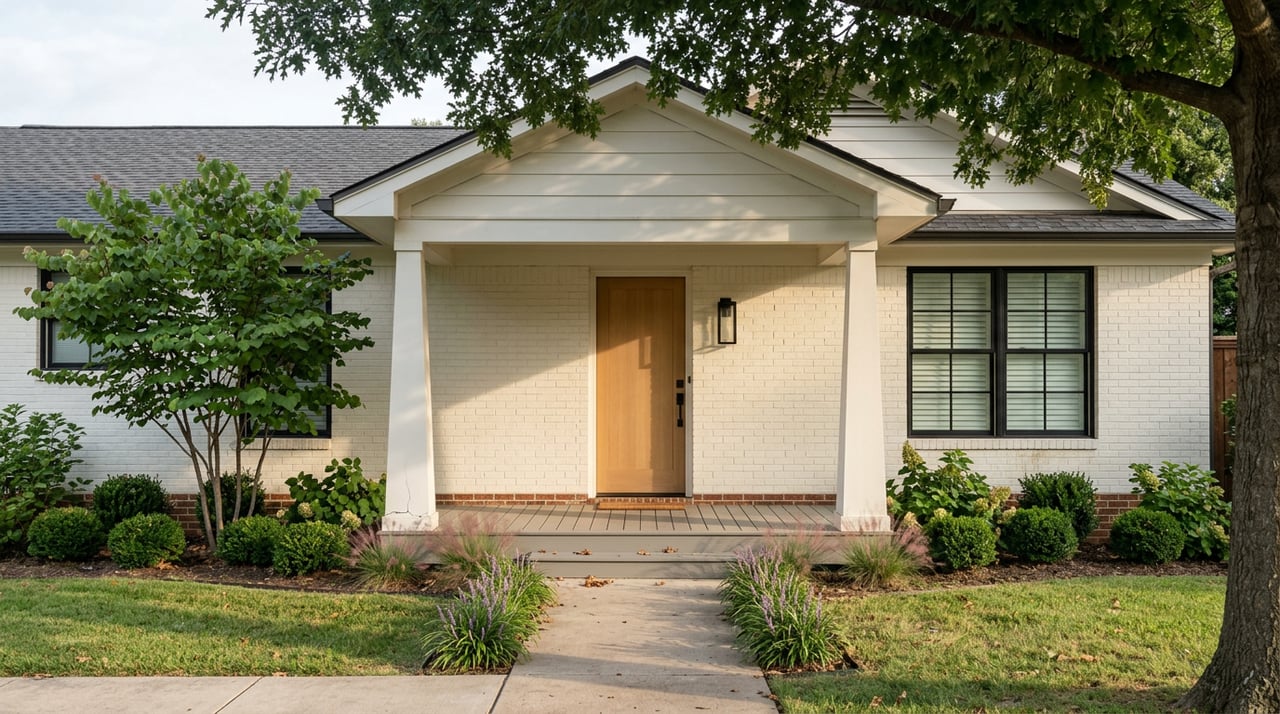
Say you own a Greek Revival two blocks off Main Street. The porch has been on your list for three years. The paint is chalking, one baluster is soft underfoot, and you have finally decided this is the summer you list. Your first call is probably a contractor. It should be the city.
That single ordering mistake, fix the house first and ask permission later, is the one thing that separates a smooth sale in Franklin's historic core from a stalled one. Everywhere else in Franklin, from Westhaven to Berry Farms, a seller can call a painter on Monday and have photos scheduled by Friday. In the Historic Preservation Overlay that surrounds the Public Square, the porch itself has to clear a review board before a contractor can touch it, and that review does not run on a listing timeline. It runs on its own.
Most exterior work visible from the street inside Franklin's historic district needs a Certificate of Appropriateness before it happens. That covers additions, window and roof changes, porch repairs, and site features like fences, and it gets reviewed against the Secretary of the Interior's Standards for historic preservation rather than a general contractor's judgment about what looks good. The intent is straightforward: keep Adams Street, Hincheyville, and Lewisburg Avenue looking like themselves for the next hundred years. The practical effect for a seller is that the cosmetic fixes a design-minded team would normally schedule in the final weeks before photography, a repainted porch rail, a replaced sash window, a rebuilt front step, are exactly the fixes that need the longest runway in this part of town.
A seller preparing a 1990s colonial in a subdivision can compress prep into two or three weeks. A seller preparing a Victorian on Adams Street should be planning that same prep months out, with the Certificate of Appropriateness application submitted before the contractor is even booked. Skip that step and you are not just risking a delay. You are risking unpermitted work sitting on a house that a lender's underwriter will eventually ask about.
The presentation work this brand is built on, the staging, the photography, the porch that photographs like it belongs on a postcard, has to be sequenced around a city approval in this district. Everywhere else, it does not.
Every Tennessee seller fills out a Seller's Property Disclosure form describing known defects. In Downtown Franklin, two more layers stack on top of that baseline, and both trace back to the age of the housing stock itself.
The first is federal. Any home built before 1978 triggers a lead-based paint disclosure requirement, and given that the historic core runs from Federal and Greek Revival construction through Victorian, Queen Anne, and 1920s Craftsman bungalows, this covers a large share of what is actually for sale in the district. It is a paperwork step, not a renovation mandate, but it needs to happen before a buyer's option period starts, not during it.
The second layer is permits, and this one has real teeth. Traditional lenders routinely require open building permits to be closed out before they will fund a loan. A porch rebuild from a decade ago that never got a final inspection sign-off, or an addition that was permitted but never closed, can surface at underwriting and stall a financed buyer at the worst possible moment. Cash buyers tend not to care about this. Financed buyers, who make up the overwhelming majority of the pool for a home in this price range, absolutely do. If you are not certain whether every past project on your house has a closed permit, that is worth confirming with the city's Building and Neighborhood Services office well before you list, not after an appraiser flags it.
None of this is unique to Franklin. What is unique is how much of the historic core's inventory carries both conditions at once: pre-1978 construction and a longer-than-usual history of owner-driven renovation work on porches, additions, and outbuildings that predates current permitting habits.
Ask most agents for a comp and they will hand you a per-square-foot average. In the historic core, that number is close to useless on its own. In the twelve months ending May 2026, closed sales tracked through RealTracs MLS for the 37064 historic district ranged from roughly $185 to $886 per square foot, with a median sale price around $675,000 and an average closer to $927,000. That is not noise. That is the difference between a compact cottage a block off Main Street and a multi-level estate on Lewisburg Avenue with the acreage, the pedigree, and the architectural detail to match.
Homes like the 1881-built Watson House, the 1898 Haynes-Harsha House, and the 1805 Saunders-Marshall-Wright House, the oldest brick home in the historic core, are not comps for each other just because they share a zip code. They are comps for their own tier: age, documented history, lot size, and the quality of past restoration work. A seller pricing off the neighborhood average risks leaving real money on the table if the home has genuine pedigree, or overshooting badly if it does not.
By contrast, the broader Franklin market moves at a more predictable pace. Citywide, homes were spending an average of 48 days on market before going under contract as of summer 2026, with a sale-to-list ratio near 98 percent and roughly 14 percent of listings closing above asking. Those numbers are a reasonable planning baseline for a newer subdivision. They are a poor substitute for street-level pricing on Lewisburg Avenue or Adams Street, where the right comp might be two streets over and forty years different in age.
The advantage of Downtown Franklin has never been in question. The Public Square still anchors daily life around Puckett's Grocery and Restaurant, Gray's on Main, and Merridee's Breadbasket, with First Fridays bringing art walks to the same brick sidewalks every month. Harlinsdale Farm sits within a mile of Main Street with its walking trails and its role as home to the Pilgrimage Music Festival, and the Harpeth River runs the length of the district's western edge. The area's Williamson County Schools assignment and its recognition as America's Favorite Main Street keep demand deep. None of that is the risk.
The risk is sequencing. If you are planning to list a historic Franklin property this fall or next spring, the order of operations looks different than it does anywhere else in Williamson County. Confirm permit history first. Submit any Certificate of Appropriateness application before you book a contractor, not after. Line up your lead-based paint disclosure paperwork early rather than treating it as a closing-week formality. And price off the specific pedigree of your street and your architectural era, not off a citywide average that was never built to describe a house like yours.
Done in that order, a historic Franklin listing can move with the same confidence as any other property in this market. Done out of order, the porch that was supposed to make the listing photos better ends up being the reason they get delayed.
Does every exterior change in the historic district need a Certificate of Appropriateness? Most changes visible from the street inside the Historic Preservation Overlay do, including additions, window and roof work, porch repairs, and fences. Interior work and changes not visible from the public right of way generally fall outside that review.
What if past work on the house was never permitted? That is worth resolving before you list rather than during a buyer's financing process. A financed buyer's lender will often require open permits closed before funding, so confirming your permit history with the city early gives you time to address any gaps on your own schedule.
Do lead-based paint disclosure rules apply even if the home has been fully renovated? The federal disclosure requirement is tied to the home's construction date, not its renovation history. Any home built before 1978 triggers the disclosure regardless of what updates have happened since.
If you are weighing the timing on a historic Franklin listing, or trying to figure out how much runway your specific street and era actually need, Angela Peach works through that sequencing with sellers before a single contractor gets a call. Request a private consultation and bring the address. The clock on a house like this starts earlier than most people expect, and starting it on time is the difference between a listing that moves and one that waits on a review board.
Stay up to date on the latest real estate trends.
October 8, 2026
October 1, 2026

September 24, 2026
September 17, 2026

September 10, 2026
September 3, 2026
August 27, 2026
August 20, 2026

August 13, 2026
Real estate is more than just a process or a transaction; it is a journey and a destination. As a multi-million and top 1% producer in the Greater Nashville area, Angela and her team can seamlessly guide you throughout all your real estate ventures.